NEYMAR
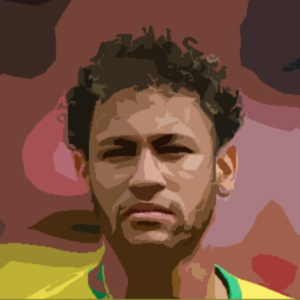
IF YOU WANT TO BE THE BEST, YOU HAVE TO LEARN FROM THE BEST.
Neymar Junior
Neymar da Silva Santos Júnior is considered one of the best footballers in the world and one of the finest players of his generation. He has often been described as Lionel Messi’s successor. Despite his many achievements, he has remained modest and humble. In 2006, he had the opportunity to join Real Madrid, but he declined because he did not want to leave his family or his club. Family and loyalty mattered more to him than money. Although his relatives supported him from the beginning, he still had to overcome many obstacles and prove his worth. Fans around the world search YouTube for compilations of Neymar’s best goals. He is often compared with Messi and Cristiano Ronaldo because his skills place him among the game’s elite. He has enjoyed major success in international club competitions, winning both the UEFA Champions League and its South American counterpart, the CONMEBOL Copa Libertadores.
September 5, 2019
In February 1992, the first child of the Santos family was born in Brazil. His parents learned that he was a boy only at birth because they could not afford an ultrasound scan. For the first week, he had no official name, so they called him Juninho—a nickname they still use. Eventually, he was named Neymar after his father. That is why he became known as Neymar Junior. He later became a star for Paris Saint-Germain and the Brazilian national team. Unfortunately, the family’s happiness was interrupted in June of the same year by a terrible car accident. Four-month-old Neymar was traveling with his parents to Santos to visit relatives when an oncoming car struck the driver’s side. His father suffered the most serious injuries. When he regained consciousness, he could not see his son. The car had stopped near a cliff, so if the baby had been thrown from it, his chances of survival would have been slim. Neymar’s parents were unable to get out, but bystanders came to help and found the bloodstained baby beneath the rear seat. Thankfully, he had remained inside the car.
Fortunately, Neymar was not seriously injured, but his father was in critical condition. His recovery was painful: for several months, his fractured pelvis had to be immobilized in traction, and his young son was frightened by the sight of him.
As a young child, the future footballer lived with his parents and sister in a single small room. Despite the cramped conditions, Neymar turned it into his own football pitch. “I played my own matches and tournaments. I kicked the ball and added my own commentary. I played, commentated, and cheered.” His favorite exercise was to kick the ball against the wall—first with his right foot, then with his left when the right became tired—before controlling it with his chest and heading it. He often played with his father on the beach. He spent every free moment improving his skills and enjoying the game. He began collecting footballs—old, new, flat, or fully inflated. He owned more than 50 and loved every one of them. As he said, you must first respect the ball before you can aspire to become a professional.
One day, when Neymar was about eight, he struck the ball with his weaker left foot after training. Seeing the poor result, his coach told him to use only his right. His father strongly disagreed: “Son, use whichever foot is closer to the ball, whether it is the right or the left. Do not be afraid to use your weaker foot. If you use it often, it will become stronger—you will feel the difference. The weaker foot supports the stronger one.” Neymar began training his left foot. The results were poor at first, but his persistence paid off. The 2013 FIFA Confederations Cup final against Spain provided a striking example: he scored a remarkable left-footed goal that Iker Casillas could not stop. His father always taught him to work on his weaknesses rather than pretend they did not exist. Champions are not born; they are made!
Neymar’s father worked hard to provide for the family. He sacrificed his own sporting ambitions for his children. He turned down opportunities to play because he feared losing his regular job—and therefore the family’s income. “Family above everything—above passion and money” could be the family’s motto. In 2006, Neymar was offered the chance to join Real Madrid for a large sum, but he declined because he did not want to leave his family. Although money was scarce and the electricity was once cut off at their home, being together remained most important. That is why 13-year-old Neymar rejected the proposal.
On August 23, 2010, Neymar and his father attended a meeting with Santos’ manager, who told them that Chelsea wanted to buy the player for €30 million. During the conversation, the manager switched off the light and pointed to an empty chair. “A great hero once sat here. Since Ayrton Senna’s death, the chair has remained empty. If Neymar stays at Santos and rejects Chelsea’s offer, it will be the first step toward earning that seat.” This marked the start of “Project Neymar,” devised by Neymar’s father to secure financial support for the player and his family. Nothing comparable had previously been done to keep a player in the country.
This article is based on the autobiography “Neymar: My Story: Conversations With My Father.”
“I had no doubts. We rejected the offer, just as we had rejected Real Madrid in 2006. It was about my happiness and development as a footballer, not about money. I do not sell myself for money. Money is important, but it does not control my life or career—only God and my parents can do that.”
“My father always told me: ‘Keep moving, son! Never stop. Run from side to side until your opponent is tired. Do not stay in your comfort zone or make things easier for your opponents.’”
“My father taught me to play that way when I was ten. If a defender is in front of me in the penalty area, I can play the ball through his legs. Dad told me: ‘Run toward him, and when he spreads his legs, put the ball between them.’ I will never forget the first time I managed it. After scoring, I ran to the front row to thank my father for teaching me.”
“I never forget one thing: my passion. I live and breathe football—the game and studying other players’ techniques—24 hours a day.”
“If you want to be a footballer, you must keep both feet on the ground and remain sensible. You must be reasonable and avoid being blinded by money at all costs.”