
The Ballon d’Or: Who Decides — and How Fair Is the Assessment?
What wins an award — the performance or the story told about it?
04.08.2020 / 27.10.2026
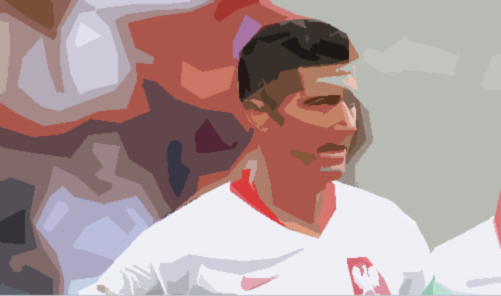
What wins an award — the performance or the story told about it?
An award is meant to honour performance. But which performances do we actually see, and who decides how their story is told?
The Ballon d’Or article uses the debate around Robert Lewandowski to ask fundamental questions about sporting awards. How do you compare different positions? How much should team success count? And when do fame and media exposure obscure our view of the game?
The author takes a critical position. That is precisely why the article invites discussion of the criteria, rather than an argument about names alone. A text for fans who want to look beyond the list of winners: what criteria would you use to decide?
The cancelled award in 2020 remains a reason to ask a fundamental question: are we judging a player’s performance — or also their fame and the story told about them?
The starting point: Robert Lewandowski and 2020
France Football did not award the Ballon d’Or in 2020. Our criticism from August 2020 stands: in our view, Robert Lewandowski deserved a fair chance of receiving it. [S11]
A cancellation, however, is not a lost vote. Without a vote taking place, there is no actual result to report. “The deserving winner in our view” is a sporting judgement that can be supported; “official winner” would be a different claim.
Candidates are not the jury
The distinction matters: the players on the shortlist are candidates, not the jury. The process UEFA described for 2024 uses a jury of journalists. [S12]
UEFA’s explanation of the 2024 process names individual performances, team achievements, class and fair play. It explicitly distinguishes the list of 30 nominees from the journalists’ jury. These are the rules for one particular edition, not a retrospective account of every earlier award. [S12]
Why the question of fairness remains
Our criticism concerns an assessment in which visibility, reputation or national affinity can overshadow performance. A spectacular forward is presented differently from a defender or goalkeeper. For us, Virgil van Dijk and Manuel Neuer are therefore also reasons to reconsider how different positions are weighted.
This criticism does not need invented certainty about behind-the-scenes deals. The possibility that lobbying or media reach may play a role is a hypothesis to examine. A player’s nationality proves neither disadvantage nor preferential treatment.
Transparency beyond mere outrage
A convincing assessment should show which period is being considered, how individual and team performance relate, and what criteria are used to compare different roles. The clearer the process, the more concretely its fairness can be discussed.
For us, Lewandowski’s performance that year remains a strong argument against cancellation without a replacement. His development remains valuable regardless of whether a jury hands him a particular trophy.
An award tells a story about performance. It is not the performance itself.
Sources
[S11] France Football / L’Équipe. Le Ballon d’Or France Football ne sera pas décerné cette année. 2020. https://www.lequipe.fr/Football/Actualites/Le-ballon-d-or-france-football-ne-sera-pas-decerne-cette-annee/1154046
[S12] UEFA. Ballon d’Or: How are the winners decided?. 2024. https://www.uefa.com/ballondor/news/0292-1c2705cb8fd5-8f2dcb111a8a-1000--ballon-d-or-how-are-the-winners-decided/