
Improve your endurance with the master’s method
This historical article introduces Wim Hof and the idea of considering breathing, endurance and mindset together. It asks why some experiences at the limits of sport attract so much attention.
07.10.2019 / 27.10.2026
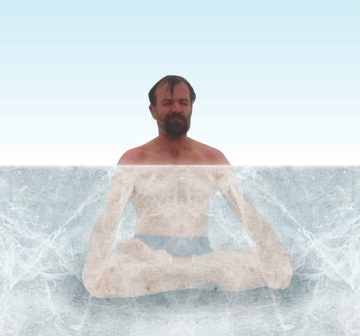
What interests you about an exceptional performance — the record or the path towards it?
This historical article introduces Wim Hof and the idea of considering breathing, endurance and mindset together. It asks why some experiences at the limits of sport attract so much attention.
What can Wim Hof’s unusual path add to your own understanding of breathing? The article presents the basic structure of his method and the interaction between breath, attention and physical experience.
We all know that to become the best, you must learn from the best. Perhaps it is worth hearing what a man who has broken 26 world records, speaks ten languages, holds his breath for ten minutes and loves swimming naked beneath thick ice has to say. He has many other achievements, of course, but what interests us is: how did he do it?
Hard work, perseverance and commitment naturally played the greatest role in his success. Like everyone, he has experienced difficult moments in life, including his wife’s suicide and bullying at school.
He developed WHM, the Wim Hof Method. It combines breathing exercises, cold exposure and concentration. One scientifically interesting aspect is its influence on stress and inflammatory responses: in the study by Kox and colleagues, trained healthy volunteers responded differently from the control group after experimental endotoxin administration. That clearly defined experimental situation was what the study examined.
The Wim Hof Method breathing sequence
- On dry land, take a comfortable seated or lying position. The surroundings should be calm and safe enough to let you focus fully on the exercise.
- The method begins with about 30 deeper breaths. Inhalation is active; exhalation is unforced.
- After the final exhalation comes a pause until the urge to breathe. End it as soon as you want to inhale again; its length is not a performance target.
- Next comes an inhalation followed by a short hold, described by the provider as approximately 15 seconds. The breath is then released.
- The provider describes three to four rounds. Stop if you feel dizzy or unwell. Because fainting is possible, this intensive breathing practice must never be used in or near water or while driving.
Within the Kundalini tradition, this experience can be described as an awakening of inner energy. The image connects breath, attention and a sense of physical vitality.
Wim Hof connects his practice with a powerful conviction: “We can do more than we think.” The thought invites us to explore our possibilities consciously and develop step by step.