Cristiano Ronaldo
September 5, 2019
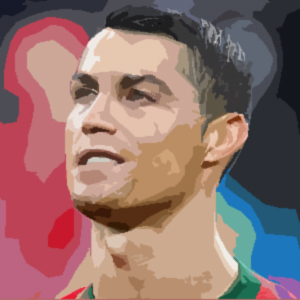
Cristiano Ronaldo is undoubtedly one of the world’s best footballers. Some people love him; others dislike him. Some regard him as arrogant, while others admire his honesty and unwavering self-belief. He is a player who provokes strong emotions wherever he goes and can look back proudly on a meteoric career. His initials and the number seven have become registered trademarks. How did he achieve it all?
Cristiano Ronaldo was born on February 5, 1985, in Funchal, the capital of the Portuguese island of Madeira. He was the fourth child in the Aveiro family and, as his mother later admitted, had not been planned. His father, Dinis, worked as a gardener and struggled with alcoholism, while his mother worked hard as a cook. The family lived in difficult conditions: the house was too small for six people, and its walls were damp. By the age of two or three, Cristiano had already developed a passion for the ball—he even slept with it in his bed.
Cristiano was not a strong student, but his teachers remembered him as well-behaved and cheerful. It became clear early on that football was his greatest passion. He often skipped classes to train and, when necessary, made a ball from socks. Because there was no football pitch nearby, he played in the street. At six, he joined his first football club. His coach described him as very thin but possessed of an unshakable will to win. He cried when he was not allowed to play or when his team lost. From the beginning, he took football extremely seriously. His nicknames included “Crybaby,” because he cried when he did not receive the ball, and “Abelinha” (“Little Bee”), because he was almost impossible to stop.
Soon, his name became known throughout Madeira, and the island’s biggest clubs began to take an interest in him. At ten, Cristiano moved to Nacional Madeira. It was obvious that he was undernourished, and the coach told his father that he needed to eat more. Cristiano’s talent and determination were nevertheless unmistakable—he always wanted to be the best. At 12, he transferred to the prestigious Sporting CP. At the time, no club had paid so much for a 12-year-old: €22,500. Leaving home was painful for both him and his family.
His early days in Lisbon were difficult. Cristiano was the youngest player on the team, and his days followed a strict schedule: school until 5:00 p.m., followed by training. Classmates mocked his Madeiran accent, which differed markedly from standard Portuguese. On his first day, he angrily threatened a teacher with a chair. A few days later, he refused to clean the locker room and was suspended for several matches. He cried almost every day because he was homesick. He later said in an interview that this was the most difficult period of his life.
At 15, he was diagnosed with a serious heart condition. Doctors discovered a congenital abnormality that caused his heart rate to accelerate. Fortunately, the affected area could be treated with a laser procedure, allowing Cristiano to continue playing football.
He continued to impress and signed for Manchester United at 18. For the young Portuguese player, this was both a great honor and a major challenge. He spoke little English and had disliked the subject at school. The British press questioned the high transfer fee, but Cristiano persevered and proved his worth. At €15 million, he became the most expensive teenager in the history of British football. His debut was a major success, and he was named Man of the Match. Soon, however, he was accused of diving. Adapting to the more physical English style of play was difficult. On September 21, after a match against Arsenal, he became involved in an altercation with Martin Keown and was fined £4,000.
At 19, he was called up to the Portuguese national team—a tremendous honor. He was highly motivated and dreamed of becoming European champion, but Portugal lost the final to Greece. Ronaldo felt that he had failed in front of his home country. The media published photographs of him crying and looking toward the sky in prayer.
His life has included both triumphs and setbacks. He faced a serious allegation, lost his father, and experienced conflicts with teammates. Yet Cristiano has consistently shown that football is his passion and lifelong dream. Whatever happens, he remains strong and works relentlessly to improve. His story inspires people who believe in their dreams, want to develop their talents, and refuse to give up.
This article is based on the book “Ronaldo: The Obsession for Perfection” by Luca Caioli.
SEO Keywords: Ronaldo biography, Cristiano Ronaldo childhood, Ronaldo motivation, famous footballers, Ronaldo story, success in football, football inspiration, Ronaldo career, Ronaldo heart surgery, Ronaldo Manchester United