
Pep Guardiola at Bayern Munich — success or disappointment?
Many trophies. Still an unanswered question?
18.08.2020 / 27.10.2026
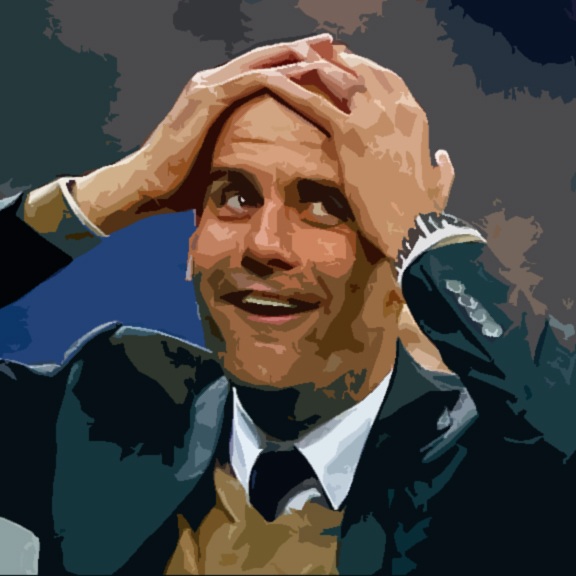
Many trophies. Still an unanswered question?
A successful record can leave a demanding question open: was this also the best possible use of the team?
This article on Guardiola’s Bayern years starts there. It discusses the expectations after Heynckes, the treatment of individual strengths and the tension between a clear playing idea and the people expected to carry it out.
The text takes a critical sporting position. It is for anyone who wants to assess coaching by more than results. Must the player adapt to the system, or must a great system also prove itself in its use of the player?
Seven trophies and three Champions League semi-finals: a successful record. But was it also the best possible use of this team? That is precisely the question behind our criticism at the time.
Success also depends on the benchmark
Guardiola took over Bayern in 2013 after the treble-winning season under Jupp Heynckes. In his three years in Munich, the club won seven trophies, including three league titles. Each Champions League campaign ended in the semi-finals. That record is documented and belongs in any assessment. [S13]
Our 2020 analysis nevertheless raised the question of disappointment. It did not mean that there had been no success, but referred to expectations of a team that had just won the biggest international club prize too.
Must the player adapt to the system — and should the system also adapt to the player?
Our critical argument is this: a coach must do more than realise a concept. They must recognise existing strengths and decide which changes genuinely help the team. Possession alone does not answer every question in a knockout tie.
This concerns transitions, roles, selection decisions and the value of established partnerships. The handling of players such as Müller, Lahm and Götze was also questioned. That sporting judgement can remain forceful without presenting private motives as established facts.
Identify responsibility without reducing everything to one cause
In our view, tactical decisions and trust in individual strengths deserve particular attention in close matches. It does not follow that every elimination resulted solely from a coaching decision, or that another plan would certainly have won the trophy.
Nor can transfers responsibly be attributed from outside to one person or one wish. Criticism of a sporting direction is different from verified knowledge of every internal negotiation.
What became of the open question from 2020?
At the time, the article asked whether Guardiola could win the Champions League with a club other than Barcelona. Since 10 June 2023, that question has been answered: Manchester City beat Inter 1–0 in the final. [S14]
That does not cancel our criticism of individual decisions in Munich. It does prevent a prediction that has since been disproved from continuing to circulate as a present-day fact.
For us, the assessment remains twofold: clear domestic success, alongside a legitimate and still critical discussion of what this Bayern team could have achieved internationally.
Sources
[S13] FC Bayern München. Historie: 2013 bis 2019 – Dominanz und Titel. club history. https://fcbayern.com/de/club/historie/meilensteine-seit-1900/2013-bis-2019-dominanz-und-titel
[S14] UEFA. Man City win Champions League: Rodri goal secures victory against Inter and completes treble. 2023. https://www.uefa.com/uefachampionsleague/news/0282-1839b24603ef-36e94e63621d-1000--man-city-win-champions-league-rodri-goal-secures-victory-aga/